Thermoelectric Cooling for CMOS Sensors
Summary
CMOS (complementary metal-oxide semiconductor) image sensors can lose image quality when heat increases dark current and thermal noise. Thermoelectric coolers, also known as Peltier coolers or TECs, provide active spot cooling to stabilize sensor temperature, improve dynamic range, and maintain image clarity in compact or high-temperature imaging systems.
Key Technical Takeaways
- CMOS sensor image quality can degrade when operating temperatures rise above approximately 50°C to 60°C.
- Dark current approximately doubles for every 6°C increase in sensor temperature.
- Reducing CMOS sensor temperature by 20°C can lower the noise floor by approximately 10 dB.
- A single-stage thermoelectric cooler can cool a CMOS sensor by up to 50°C below the hot-side heat sink temperature.
- OptoTEC™ OTX thermoelectric coolers support operating temperatures up to 120°C.
- OptoTEC™ HTX thermoelectric coolers support operating temperatures up to 150°C.
- HiTemp ETX thermoelectric coolers achieve a maximum ΔT of 83°C and are available in more than 50 models.
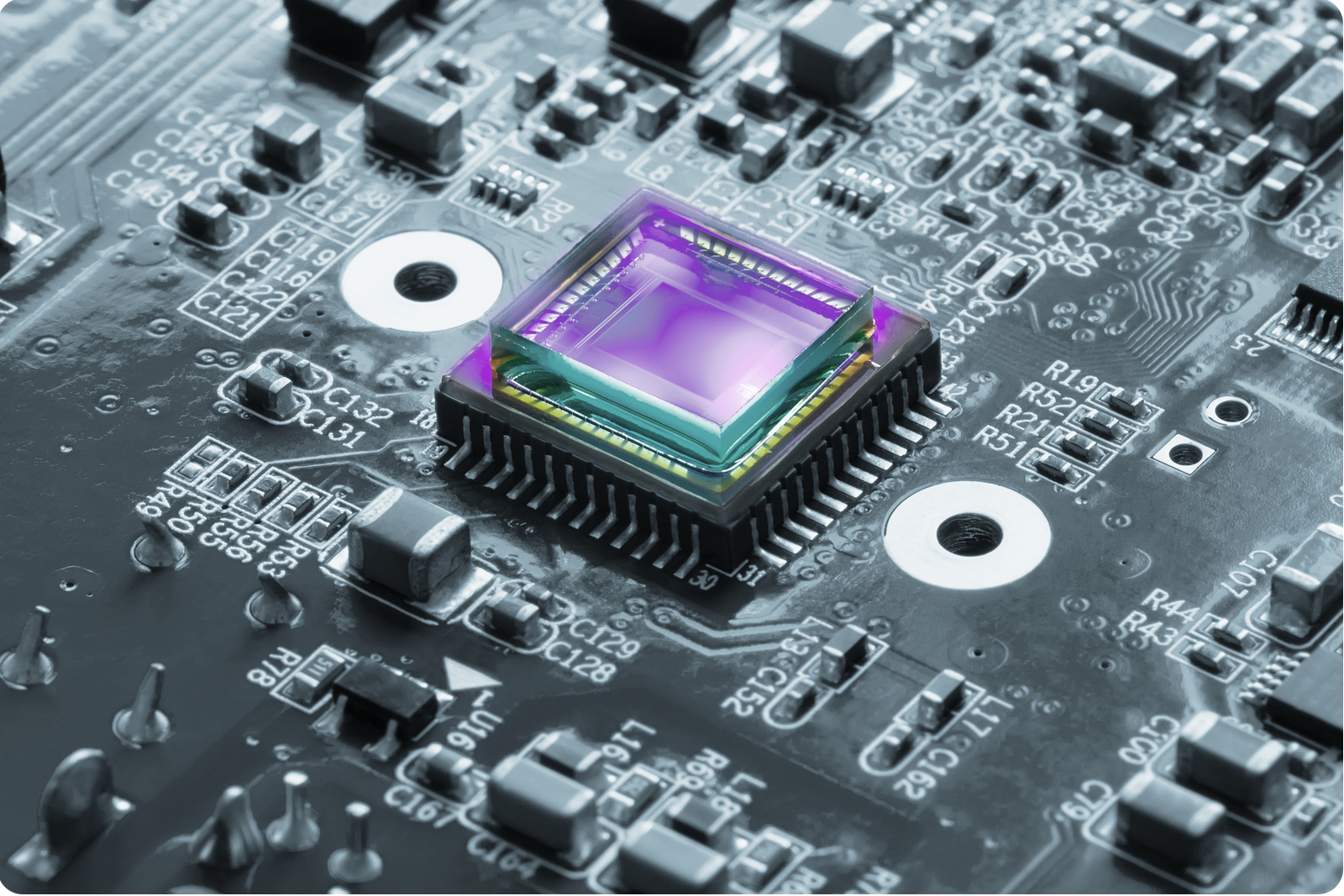
CMOS Sensors have become widely used in emerging applications and areas traditionally held by CCD sensors.
Technical background: CCD vs. CMOS architectures
Digital cameras use two main types of imaging sensors: CCD (charge-coupled device) sensors and CMOS (complementary metal-oxide semiconductor) sensors. Both types of sensors perform the same function: converting light (photons) into an electrical charge (electrons) using an intricate 2-D array of photo-detectors (pixels). These individual buckets of charge are then amplified and digitized to create the digital image. Both CCD and CMOS sensors convert light into charge within a 2-D pixel array, but they differ in how that charge is processed.
| Feature | CCD Sensors | CMOS Sensors |
|---|---|---|
| Charge handling | Charge is shifted off-chip row by row to a low-noise amplifier and analog-to-digital converter. | Each pixel includes its own amplifier, and each column may include an analog-to-digital converter. |
| Readout speed | Limited by serial charge transfer. | Parallel readout enables higher frame rates. |
| Temperature sensitivity | High; dark current increases rapidly with heat. | Moderate; image quality can degrade above approximately 50°C. |
| Integration | Off-chip amplification and processing. | On-chip amplification and image processing. |
| Typical cooling method | Multistage thermoelectric coolers for deep cooling. | Single-stage or dual-stage thermoelectric coolers for spot cooling. |
CCD sensors are often cooled to very low temperatures to minimize dark current during long exposures. For example, some CCD applications use multistage thermoelectric coolers to reach approximately -50°C or, in more demanding systems, approximately -90°C.
CMOS sensors usually do not require the same level of deep cooling. However, thermal management remains critical in high-resolution, high-frame-rate, high-sensitivity, or outdoor imaging systems.
How CMOS Sensors Convert Light Into Digital Images
A CMOS image sensor converts incoming light into electrical charge at each pixel. The sensor then amplifies, digitizes, and processes the signal to create a digital image.
Advances in CMOS sensor architecture have improved quantum efficiency, which is the ability of the sensor to convert photons into measurable electrons. These advances have enabled CMOS sensors to move into applications once dominated by CCD sensors, including high-end scientific imaging, industrial inspection, and machine vision.
CMOS sensors now support high-resolution imaging across parts of the electromagnetic spectrum that are not visible to the human eye. This makes them valuable for inspection systems, analytical instruments, robotics, autonomous vehicles, and other applications that require accurate digital image capture.

Outdoor applications such as CCTV cameras often require a Peltier cooling solution.
Emerging Applications for Cooled CMOS Sensors
CMOS image sensors are now used in a wide range of applications that require high image quality, high frame rates, and compact system design. These applications include:
- Machine vision
- Industrial inspection
- Robotic vision
- Autonomous vehicles
- Advanced driver assistance systems
- Object detection and recognition
- Optical character recognition
- Barcode readers and scanners
- Augmented reality and virtual reality
- Outdoor surveillance cameras
- Astronomical and satellite photography
- Radar image enhancement for weather forecasting
- Scientific and analytical imaging
In advanced driver assistance systems and autonomous vehicles, object detection and recognition systems rely heavily on CMOS image sensors. These systems must operate reliably across wide ambient temperature ranges while maintaining image clarity and signal consistency.
CMOS sensor technology also supports applications beyond imaging, including humidity sensors, temperature sensors, X-ray detectors, micro-hotplates, and sensors for fluid flow.
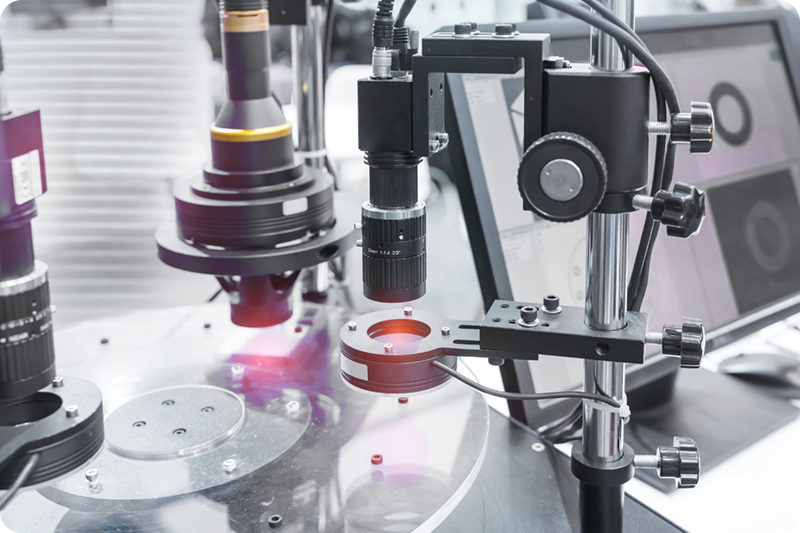
Robotic vision sensor cameras use CMOS Sensor Technology
Why Temperature Affects CMOS Sensor Image Quality
CMOS sensors generate an unwanted signal when no light is present. This signal is known as dark current. As temperature increases, dark current rises and creates thermal noise that reduces image contrast, image resolution, and dynamic range.
A rough approximation is that dark current doubles for every 6°C increase in temperature. A 20°C reduction in CMOS sensor temperature can reduce the noise floor by approximately 10 dB, improving dynamic range by approximately 10 dB.
Elevated temperatures can also reduce frame-to-frame consistency. This makes image correction, calibration, and noise cancellation more difficult in applications that require stable image data over time.
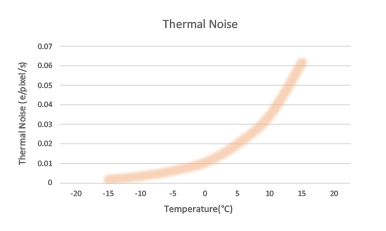
A rough approximation shows that dark current doubles for every 6°C rise in temperature.
Thermal Challenges in CMOS Sensor Cooling
Cooling CMOS sensors in compact imaging systems presents several thermal and mechanical challenges. Adding a thermoelectric cooler can increase system size, cost, weight, and complexity, so the thermal design must be optimized carefully.
Condensation is one of the most important risks. If the cooled sensor surface falls below the dew point, moisture can form on exposed surfaces. Some imaging systems operate in vacuum environments or use insulated surfaces to prevent condensation buildup.
Heat rejection is another key design challenge. Passive cooling may be insufficient when airflow is restricted, ambient temperature is high, or surrounding electronics add heat to the sensor environment.
A thermoelectric cooler also adds heat to the hot-side heat rejection path. The heat exchanger must dissipate both the heat removed from the sensor and the electrical input power consumed by the thermoelectric cooler.
Why Thermoelectric Cooling Is Used for CMOS Sensors
When passive cooling cannot keep a CMOS sensor within its required operating temperature range, thermoelectric cooling provides active temperature control. This helps reduce dark current, suppress thermal noise, and maintain image stability in compact or high-temperature imaging systems.
A thermoelectric cooler creates a controlled temperature differential across the device. The cold side removes heat from the CMOS sensor, while the hot side rejects heat through a heat sink, fan, liquid cooling loop, or other heat exchanger.
This approach is especially useful in applications where image quality, dynamic range, and frame-to-frame consistency must remain stable despite changing ambient temperatures or heat from nearby electronics.
Passive Cooling vs. Thermoelectric Cooling for CMOS Sensors
The image quality of a CMOS sensor degrades at temperatures typically in the 50 to 60ºC range, based on the quality of the sensor. For indoor applications with adequate airflow, a free-convection heat sink and thermal interface material may be sufficient. The heat sink should maximize surface-to-air contact to reduce thermal resistance and keep the CMOS sensor only a few degrees above ambient temperature.
In compact imaging systems, passive cooling is often limited by space constraints. Forced-air cooling may be required when the available heat sink volume is too small.
For most outdoor or high-temperature applications, passive cooling is not enough. Heat from ambient conditions and nearby electronics can exceed the CMOS sensor’s upper temperature limit. In these cases, active thermoelectric cooling is required.
A single-stage thermoelectric cooler can create a temperature differential that lowers the CMOS sensor temperature by as much as 50°C below the hot-side heat sink temperature. For example, if the hot-side heat sink is operating at 90°C, the thermoelectric cooler can reduce the CMOS sensor temperature to approximately 40°C when required.
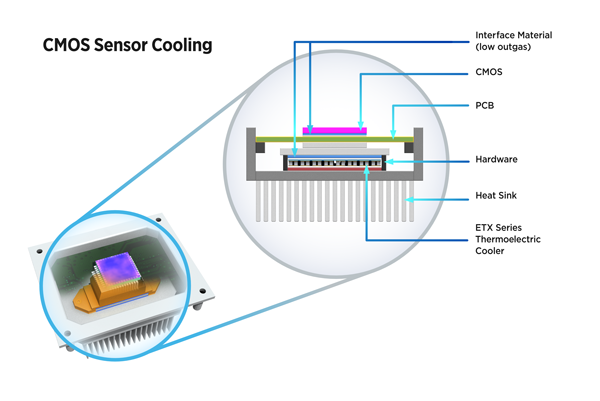
Outdoor CMOS sensor applications require an active cooling solution, such as a thermoelectric cooler, to keep the device from exceeding its maximum operating temperature.
Design Considerations for Thermoelectric CMOS Sensor Cooling
An effective CMOS sensor cooling system must manage both the cold side and the hot side of the thermoelectric cooler. The cold side must make efficient thermal contact with the sensor, while the hot side must reject heat with low thermal resistance.
Important design considerations include:
- Sensor operating temperature
- Ambient temperature range
- Heat generated by nearby electronics
- Available space for heat sinks or heat exchangers
- Airflow restrictions
- Condensation risk
- Thermal interface material selection
- Outgassing requirements
- Mechanical mounting pressure
- Thermal shorting between hot and cold surfaces
- Required image stability and frame-to-frame consistency
Outgassing is especially important in optical systems. Materials that outgas can contaminate imaging sensor optics and degrade long-term performance. Low-outgassing thermal interface materials or pre-tinned solder surfaces may be required between the thermoelectric cooler and the CMOS sensor.
Thermal shorting must also be minimized. Thermal shorting occurs when cold-side surfaces come into contact with hot-side surfaces, forcing the thermoelectric cooler to draw more current to achieve the same cooling performance.
Thermoelectric Cooling Solutions from Tark Thermal Solutions
Tark Thermal Solutions provides standard and custom thermoelectric cooling solutions for CMOS sensors and high-end imaging systems. With more than 60 years of thermal management expertise, Tark Thermal Solutions supports engineers in designing compact, reliable, and efficient cooling systems for demanding optical and electronic applications.
For CMOS sensor cooling, Tark Thermal Solutions offers OptoTEC™ OTX/HTX and HiTemp ETX thermoelectric coolers for machine vision, industrial inspection, autonomous systems, scientific imaging, and outdoor camera applications.
Tark Thermal Solutions also supports optimized hot-side and cold-side heat exchanger design to reduce thermal resistance and improve cooling efficiency.
Recommended Thermoelectric Coolers for CMOS Sensor Cooling
| Product Series | Best Fit | Key Technical Benefit | Operating Temperature / Performance |
|---|---|---|---|
| OptoTEC™ OTX Series | Compact CMOS sensor cooling in space-constrained systems | High heat pumping capacity in a miniature thermoelectric cooler | Maximum operating temperature of 120°C |
| OptoTEC™ HTX Series | High-temperature optoelectronic and imaging systems | AuSn solder construction for higher-temperature operation | Maximum operating temperature of 150°C |
| HiTemp ETX Series | Elevated-temperature imaging and industrial systems | Enhanced construction and higher cooling capacity | Maximum ΔT of 83°C; more than 50 models available |
OptoTEC™ OTX/HTX Thermoelectric Coolers
The OptoTEC™ OTX/HTX Series is a high-performance miniature thermoelectric cooler designed for applications with tight geometric space constraints. Featuring next generation materials, the OptoTEC OTX/HTX Series boosts cooling performance over standard product offerings while offering a higher coefficient of performance (COP).
The OptoTEC Series is offered in two versions; OTX and HTX. The OptoTEC OTX uses SbSn solder, enabling a maximum operating temperature of 120°C and a melting point of 232°C for reflow purposes. By utilizing AuSn solder, the OptoTEC HTX thermoelectric cooler survives in temperatures up to 150°C and has a melting point of 280°C.
Manufacturing process controls have been enhanced to ensure repeatability and long-life operation. Thermoelectric coolers have passed Telcordia GR-468 CORE requirements to withstand harsh operating environments.
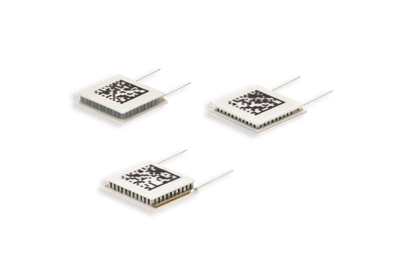
The OptoTEC™ OTX/HTX Series is a miniature thermoelectric cooler offering high heat pumping capacity for its size.
HiTemp ETX Thermoelectric Coolers
Our HiTemp ETX Series is a high-performance thermoelectric cooler delivering superior performance at elevated operating temperature conditions. This product series uses an enhanced thermoelectric module construction that prevents performance degradation in high temperature environments and advanced thermoelectric materials that boost cooling capacity by up to 10%. By utilizing an improved thermal insulating barrier compared to standard thermoelectric coolers, the HiTemp ETX Series achieves a maximum temperature differential (ΔT) of 83°C.
Offering a wide range of heat pumping capacities and form factors, the HiTemp ETX Series contains over 50 models to support a wide range of applications. Tark Thermal Solutions’ robust thermoelectric cooler construction provides superior protection at elevated temperatures where standard grade thermoelectric coolers will fail.
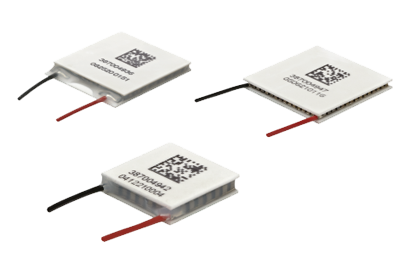
Tark Thermal Solutions HiTemp ETX Series contains more than 50 models to support a wide range of CMOS Sensor applications.
Conclusion
CMOS image sensors continue to expand into high-performance applications that require compact size, high frame rates, high resolution, and reliable operation in challenging environments. As these systems move into outdoor, autonomous, industrial, and scientific applications, thermal management becomes essential.
Thermoelectric cooling helps CMOS sensors maintain image quality by reducing dark current, lowering thermal noise, improving dynamic range, and keeping the sensor below its maximum operating temperature.
OptoTEC™ OTX/HTX and HiTemp ETX thermoelectric coolers from Tark Thermal Solutions provide active spot cooling for compact and high-temperature CMOS sensor applications. These solutions help engineers improve image resolution, system reliability, and long-term performance in demanding imaging environments.
Visit our website to find OptoTEC OTX/HTX Series or HiTemp ETX Series
FAQ:
Why do CMOS sensors need cooling?
CMOS sensors need cooling when elevated temperatures increase dark current and thermal noise. Cooling helps preserve image resolution, dynamic range, contrast, and frame-to-frame consistency.
How does temperature affect CMOS image quality?
As CMOS sensor temperature rises, dark current increases and creates thermal noise. This reduces image quality, lowers dynamic range, and can make noise cancellation less effective.
At what temperature does CMOS sensor image quality degrade?
CMOS sensor image quality commonly begins to degrade in the 50°C to 60°C range, depending on the sensor design, application, and image quality requirements.
How much does dark current increase with temperature?
As a rough approximation, dark current doubles for every 6°C rise in CMOS sensor temperature.
How much can cooling improve CMOS sensor noise performance?
A 20°C reduction in CMOS sensor temperature can reduce the noise floor by approximately 10 dB. This can improve dynamic range and image clarity.
How much can a thermoelectric cooler reduce CMOS sensor temperature?
A single-stage thermoelectric cooler can reduce CMOS sensor temperature by as much as 50°C below the hot-side heat sink temperature, depending on the thermal design and operating conditions.
When is passive cooling enough for a CMOS sensor?
Passive cooling may be sufficient for indoor CMOS sensor applications with low heat loads, adequate airflow, and enough space for a properly sized heat sink.
When is active thermoelectric cooling required?
Active thermoelectric cooling is often required in outdoor, compact, high-temperature, or high-resolution imaging systems where passive cooling cannot keep the CMOS sensor below its maximum operating temperature.
Which Tark Thermal Solutions products are used for CMOS sensor cooling?
Tark Thermal Solutions offers OptoTEC™ OTX/HTX miniature thermoelectric coolers for compact CMOS sensor cooling and HiTemp ETX thermoelectric coolers for elevated-temperature imaging applications.
What is the difference between OptoTEC™ OTX and OptoTEC™ HTX thermoelectric coolers?
OptoTEC™ OTX thermoelectric coolers use SbSn solder and support operating temperatures up to 120°C. OptoTEC™ HTX thermoelectric coolers use AuSn solder and support operating temperatures up to 150°C.
What is the maximum ΔT of HiTemp ETX thermoelectric coolers?
HiTemp ETX thermoelectric coolers from Tark Thermal Solutions achieve a maximum temperature differential, or ΔT, of 83°C.
How can condensation be managed in cooled CMOS sensor systems?
Condensation can be managed by controlling the sensor temperature relative to the dew point, insulating exposed cold surfaces, using sealed or vacuum environments, and designing the system to prevent moisture buildup on optical surfaces.
Why is outgassing important in CMOS sensor cooling?
Outgassing is important because released materials can coat optical surfaces and degrade image quality. Low-outgassing thermal interface materials or pre-tinned solder interfaces may be required in sensitive imaging systems.
What applications benefit from thermoelectric cooling for CMOS sensors?
Applications that benefit from thermoelectric CMOS sensor cooling include machine vision, autonomous vehicles, ADAS, industrial inspection, robotics, outdoor surveillance, scientific imaging, astronomical imaging, optical character recognition, barcode scanning, and satellite imaging.