
Why Labs Rely on Recirculating Chillers?
Summary
Laboratories depend on accurate, repeatable, and controlled processes. Recirculating chillers help maintain stable operating temperatures for instruments used in chemical analysis, biological testing, diagnostic imaging, materials science, pharmaceutical research, environmental testing, forensic analysis, and food and beverage testing.
Tark Thermal Solutions provides recirculating chillers designed for precise thermal control, high reliability, low noise, high coefficient of performance, and long-term system uptime. With temperature stability down to ±0.05°C and refrigerant options such as natural R290 with near-zero Global Warming Potential, these systems support modern laboratory performance requirements and Green Lab initiatives.
Why Thermal Management Matters in Lab Science
Lab Science includes research, experimentation, analysis, diagnostics, and regulatory testing across many scientific disciplines. These applications often involve solids, liquids, or gases that must be observed, measured, processed, or analyzed under controlled conditions.
Reliable thermal management is essential because temperature variation can affect measurement accuracy, process repeatability, sample integrity, instrument performance, and long-term equipment reliability.
Many laboratory systems use thermal management technologies such as recirculating chillers, thermoelectric coolers, heat exchangers, and cold plates. Each technology has specific capabilities, but recirculating chillers are especially valuable when instruments require stable, continuous, and fluid-based temperature control.
More specifically, recirculating chillers play a vital role in integrating with a variety of lab equipment and instruments enabling many of the processes and techniques to function as they were designed.
What Is a Recirculating Chiller?
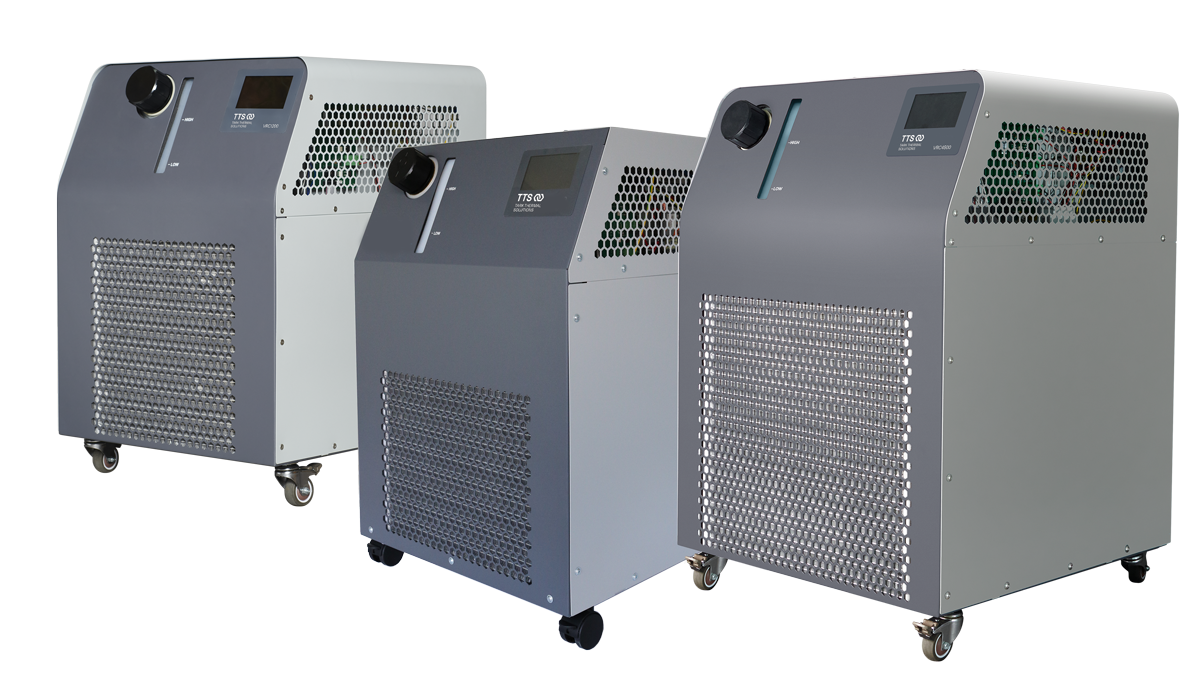
Recirculating chillers are extremely versatile, self-contained thermal management systems that provide precise temperature control with temperature stability down to +/- 0.05°C. They feature a high coefficient of performance, high reliability combined with low noise and no harmful refrigerants, ideal for today’s Green Labs.
Today’s chillers are expected to deliver cost-effective, maintenance-free operation for maximum system uptime, as well as be compliant with foreseeable future regulations with regard to refrigerant use. This includes using natural R290 refrigerant, with a near-zero Global Warming Potential (GWP) when compared to traditional hydrofluorocarbon (HFC) refrigerants.
 Recirculating Chillers and Green Lab Requirements
Modern laboratories are increasingly focused on reducing energy use, lowering environmental impact, and preparing for future refrigerant regulations.
Recirculating chillers that use natural R290 refrigerant help support these goals. R290 has near-zero Global Warming Potential compared with traditional hydrofluorocarbon refrigerants, making it a strong option for laboratories seeking more sustainable thermal management systems.
For Green Labs, the ideal chiller combines energy efficiency, low noise, high reliability, maintenance-free operation, and refrigerant compliance.
Laboratory Equipment That Uses Recirculating Chillers
Recirculating chillers are used across a wide range of laboratory instruments and process systems. Common examples include:
| Laboratory Equipment | Thermal Management Function |
|---|---|
| Rotary evaporators | Supports fluid separation and solvent evaporation |
| Rheometers | Stabilizes temperature during flow and viscosity measurements |
| Electron and digital microscopes | Supports imaging stability and instrument reliability |
| Bioreactors and fermenters | Maintains controlled temperatures for biological processes |
| Incubators | Supports stable environmental conditions |
| Milling machines | Controls heat during sample grinding and nanoparticle preparation |
| Vacuum systems | Removes heat from pumps and process components |
| X-ray diffractometers | Supports stable analysis of material structures |
| Mixing vessels | Maintains temperature during chemical mixing |
| Diffusion pumps | Helps regulate heat in vacuum generation systems |
These systems rely on stable temperature control to support sample preparation, material processing, imaging, biological growth, chemical reactions, fluid separation, and structural analysis.
Analytical Laboratory Applications
In analytical laboratories, recirculating chillers help stabilize instruments and processes that depend on precise thermal conditions.
Typical applications include:
| Application | Why Temperature Control Matters |
|---|---|
| Cell culture and cell analysis | Maintains controlled conditions for biological accuracy |
| High-performance liquid chromatography | Improves separation efficiency and repeatability |
| Gas chromatography | Supports efficient separation and analysis of volatile compounds |
| Enzymatic reaction studies | Maintains reaction conditions for reliable results |
| Protein localization in tissue samples | Supports controlled preparation and analysis workflows |
| Ultra-low temperature freezers and cryogenic storage | Supports auxiliary cooling and system reliability |
| Small animal MRI systems | Helps stabilize imaging system components |
Stable temperature control improves analytical repeatability, protects samples, and supports consistent instrument performance.
Recirculating Chillers in Materials Science and Semiconductor Labs
Materials science laboratories use recirculating chillers to evaluate how materials behave under controlled thermal conditions. These applications include mechanical testing, thermal cycling, material processing, and semiconductor metrology.
In semiconductor metrology, recirculating chillers support the analysis of electrical, optical, and thermal properties of semiconductor devices. Stable temperature control helps ensure that measurement results are consistent and that test conditions remain repeatable.
Recirculating Chillers in Mass Spectrometry
Mass spectrometry is used to identify the elements or molecular composition of complex substances. Applications include drug testing, food contamination detection, pesticide residue analysis, isotope ratio determination, protein identification, and carbon dating.
Recirculating chillers help maintain stable temperatures in critical mass spectrometer areas, including the ion source and detector regions. Thermal stability supports measurement accuracy, signal consistency, and reliable instrument operation.
Recirculating Chillers in Medical Laboratories
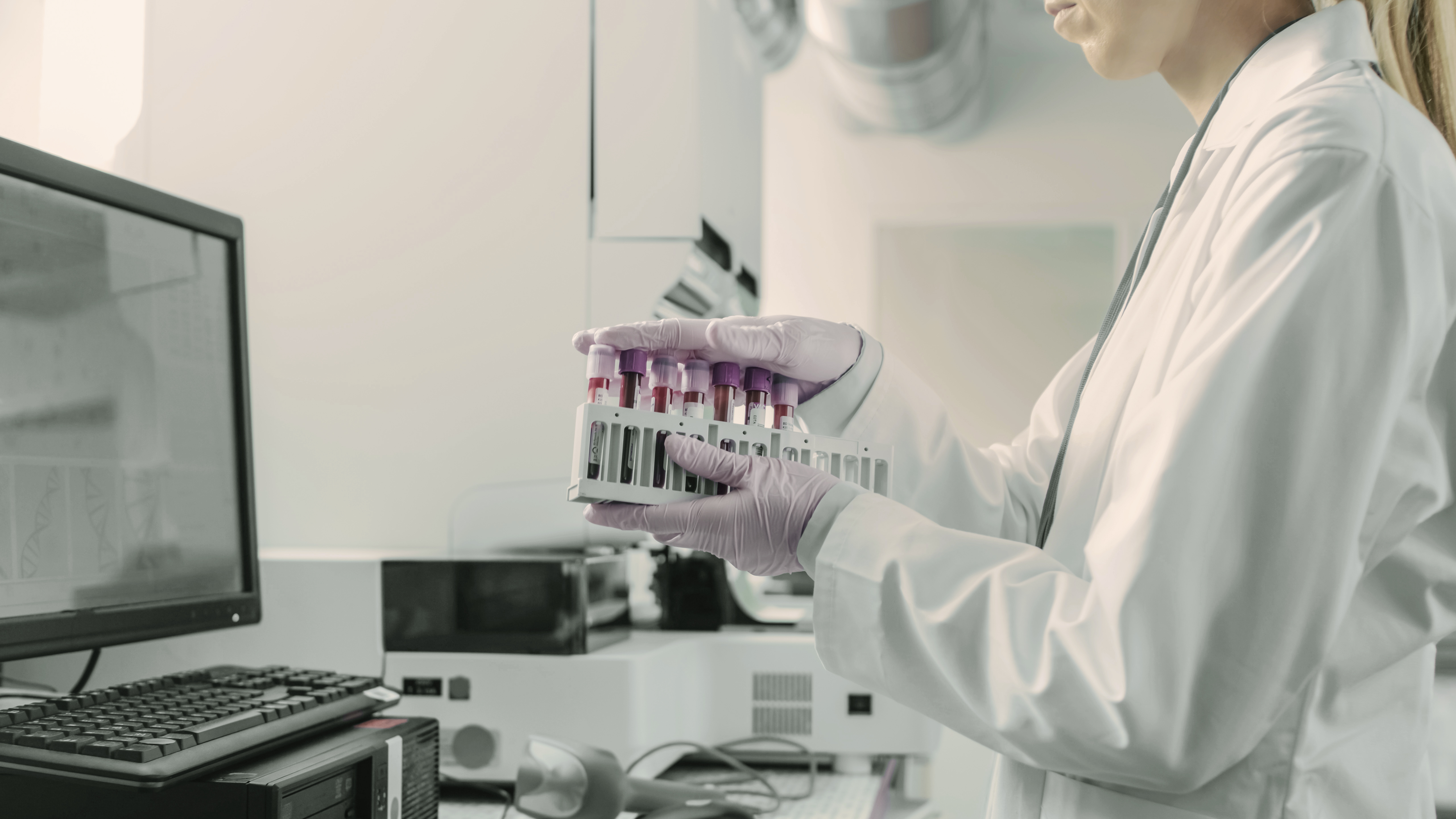
Medical laboratories use recirculating chillers to support diagnostic and research instruments that require stable operating temperatures. These systems help researchers and clinicians conduct accurate investigations across medical science, healthcare, and life science applications.
By maintaining controlled thermal conditions, recirculating chillers support reliable diagnostics, repeatable experiments, and stable operation of sensitive medical laboratory equipment.
Why Choose Tark Thermal Solutions for Laboratory Cooling?
Tark Thermal Solutions provides precision thermal management systems for laboratory, analytical, medical, and scientific applications. Its recirculating chillers are designed to support demanding instruments that require accuracy, reliability, low noise, and continuous operation.
For Lab Science applications, Tark Thermal Solutions chillers help laboratories maintain:
- Reliable temperature stability
- High instrument uptime
- Efficient cooling performance
- Low-noise operation
- Compatibility with multiple laboratory systems
- Support for Green Lab and refrigerant compliance goals
Conclusion
Recirculating chillers are essential thermal management systems for Lab Science applications. They provide precise temperature control, low noise, high reliability, high coefficient of performance, and versatile integration across laboratory instruments and processes.
For laboratories focused on accuracy, repeatability, uptime, and sustainability, Tark Thermal Solutions recirculating chillers offer a reliable solution for controlled scientific environments.
Related Products
