
Keeping Light in Line: Wavelength Selective Switch (WSS) Thermal Management
Summary
- A wavelength-selective switch (WSS) routes, blocks, or attenuates individual wavelength channels within a multiplexed optical signal.
- Temperature changes can alter optical alignment, refractive index, liquid-crystal phase response, MEMS mirror behavior and internal calibration.
- Thermoelectric coolers (TECs) create a stable local thermal environment around the optical core, helping maintain predictable channel mapping and attenuation across changing ambient conditions.
- The correct TEC depends on heat load, target temperature, ambient range, available footprint, hot-side heat rejection and control requirements.
What Is a Wavelength Selective Switch?
Modern optical networks are built on an invisible highway of light, with a single fiber sharing dozens or hundreds of wavelengths. Each wavelength carries its own data stream, and network operators need ways to steer, reshape, and manage those channels on the fly.
A Wavelength Selective Switch (WSS) is a reconfigurable optical device that accepts a multiplexed fiber‑optic signal (many wavelengths in a single input fiber), and independently controls what happens to each wavelength. For every channel, the WSS can route it to a chosen output port, drop it (block it), or adjust its attenuation (power level).
Each wavelength falls onto a specific region or pixel of this switching element, which then redirects it to the desired output fiber.
What Does a WSS Enable in an Optical Network?
WSS technology is a key enabler of agile, high‑capacity optical networks. WSS modules allow operators to:
- Add new wavelengths into a line fiber
- Drop selected wavelengths to local access networks
- Bypass wavelengths entirely to create express paths
- Shift capacity dynamically between routes
- Rebalance traffic in response to load or failures
- Introduce new services without major physical rework
The result is an optical layer that behaves much more like a software‑defined network. All of this can be done without manually repatching fibers, which makes network reconfiguration much faster and less error‑prone.
However, all this precision comes at a cost. WSS devices are thermally sensitive, and the accuracy of wavelength separation and switching depends on tight optical alignment and stable material properties.
Why Are Wavelength Selective Switches Thermally Sensitive?
Three thermal challenges dominate WSS performance: temperature-induced optical drift, the intrinsic thermal sensitivity of LCoS and MEMS switching elements, and hot spots in compact module packaging.
- Temperature-induced optical drift
- The intrinsic thermal sensitivity of LCoS and MEMS switching elements
- Hot spots in compact module packaging
Optical Drift and Misalignment
The WSS relies on the exact relationship between wavelength, angle, and position on the switching element. Diffraction gratings and lenses change their behavior slightly as they expand or contract with temperature. Refractive indices of glasses and coatings shift with temperature. Mechanical mounts and substrates expand at different rates.
These can lead to:
- Channel center frequency shift relative to the intended position
- Increased insertion loss or crosstalk
- Mis‑routing in extreme cases
If not compensated, optical drift shows up as degraded performance and potentially higher bit‑error rates.
Thermal Sensitivity of LCoS and MEMS Switching Elements
Liquid Crystal on Silicon‑based (LCoS) WSS and MEMS-based WSS technologies have their own thermal sensitivities. LCoS devices depend on precise control of phase delay in the liquid crystal layer, which is temperature‑dependent:
- Response time and phase modulation range vary with temperature
- At low temperatures, liquid crystal may become too viscous, slowing response
- At high temperatures, liquid crystal alignment or stability can degrade, impacting contrast and phase accuracy
- The LCoS chip also contains CMOS electronics, which add further heat and have their own reliability limits
MEMS-based WSS use arrays of micro-mechanical tilting mirrors as the core beam-steering engine. Each mirror corresponds to one wavelength channel and directs its beam to the desired output port at the required attenuation level.
- Temperature affects the stress and curvature in the mirror and suspension arms
- Thermal expansion can change the effective tilt angle for a given drive signal
- Repeated thermal cycling can fatigue mechanical joints, impacting long‑term reliability
Both LCoS- and MEMS-based WSS implementations need a controlled temperature envelope to preserve their performance and lifetime.
Hot Spots in Compact Modules
WSS modules are often packaged in compact formats (line cards, pluggable modules, or small optical shelves) with high‑density drivers, control ASICs, and DSPs. There is limited space for independent heat sinks or forced air cooling which can create hot spots:
- The switching element area may see higher temperatures than the module base
- Electronics adjacent to optics can create local gradients, even if average module temperature is within spec
- Non‑uniform temperature across the device can cause channel‑dependent drift and local stress on specific components
WSS Thermal Failure Modes
If thermal management is poor or environmental conditions exceed design limits, several failure modes can occur.
Gradual Performance Degradation
This is often the first sign of thermal problems:
- Channels show increased insertion loss or fluctuating attenuation
- Crosstalk between adjacent wavelengths rises
- Optical Signal-to-Noise Ratio degrades, causing higher error rates on specific channels
Operators may initially diagnose these symptoms as fiber issues, amplifier problems, or transponder faults, but the root cause can be temperature‑induced drift in the WSS.
Misrouting or Loss of Channels
Severe optical drift or switching element instability can push some wavelengths outside their intended switching region:
- A channel may be partially or fully directed to the wrong output port
- In extreme cases, it can miss all output fibers and be effectively “lost”
- From the network perspective, this can manifest as intermittent service loss on otherwise healthy fibers
Permanent Damage to Components
If temperatures exceed the safe operating range or repeated cycling stresses materials:
- Liquid crystal layers can suffer irreversible changes in alignment or chemistry
- MEMS structures can crack, stick (stiction), or lose mechanical integrity
- Adhesives and optical mounts can creep or delaminate
- Electronics can experience accelerated aging or outright failure
These failures typically require module replacement and may be preceded by a period of unstable behavior.
Calibration Drift and Control Loop Instability
Many WSS designs rely on internal calibration tables and closed‑loop control:
- Temperature‑dependent calibration may no longer match reality if gradients are large or the module ages thermally
- Control algorithms that assume uniform temperature may over‑ or under‑correct, causing oscillatory or unstable behavior
This can look like “noisy” per‑channel attenuation and inconsistent performance across reconfigurations.
How Thermoelectric Coolers (TECs) Change WSS Behavior
Optimum thermal management for WSS is less about keeping everything cold and more about keeping everything stable, uniform, and predictable. TECs solve precision control and local stability problems that bulk materials and liquid systems alone don’t fully address.
- Tight temperature setpoint and low drift
- Optical path length, refractive index, and LCoS/MEMS phase response all need to stay within very narrow tolerances to keep wavelength mapping and attenuation accurate
- TECs can actively pull the core to a specific temperature (often slightly above ambient) and hold it there within a fraction of a degree, independent of ambient swings
- Fast local correction vs. slow global cooling
- Liquid loops and high‑conductivity materials are great at removing bulk heat and lowering overall temperatures, but they respond at the scale of the entire card or chassis.
- TECs can quickly increase or decrease a few watts right at the device, countering short‑term load changes before they translate into optical drift.
TECs are placed directly under or around the most temperature‑sensitive parts of a WSS, typically the LCoS chip or MEMS mirror-array switching element and nearby optics, to control the junction/optical core temperature and maintain it at a precise, stable setpoint.
TECs are also placed under or in contact with the main dispersive/optical assembly when its spectral performance is highly temperature‑dependent and needs active stabilization.
Even with excellent heat spreaders, there will be gradients and hot spots resulting in the optical core sitting several degrees above the average card temperature. A TEC plus good sensing gives the optics their own microclimate, decoupling critical alignment and phase behavior from the rest of the module’s thermal chaos.
TECs with double sealing provide two independent barriers against moisture ingress. This is critical for long-term reliability because condensation or humidity reaching the thermoelectric couples, solder joints, and wiring can cause corrosion, electrical leakage, and premature module failure, which is especially important when the TEC drives the optical assembly below ambient temperature.
OptoTEC™ OTX Series for Cooling WSS Optical Core
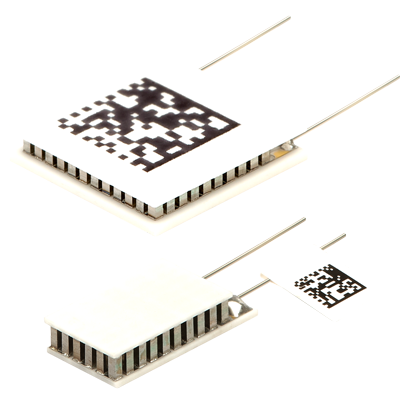
For cooling a conventional WSS optical core, the OptoTEC OTX Series is an appropriate starting point provided you are stabilizing a small LCoS/MEMs chip, laser reference, or compact optical assembly. An OTX Series TEC is a miniature, high-performance cooler for repeatable, long-life optoelectronic temperature stabilization in telecom and industrial-laser applications. It is matched to the actual die/submount footprint, using its metallization and mounting options to integrate it beneath the controlled optical element. This makes the OTX Series particularly suitable for:
- An LCoS switching chip or its compact optical-core submount
- A MEMS switching actuator/optical bench that needs stable temperature
- A reference laser or wavelength-monitoring subassembly
- A small heater/cooler “island” where temperature stability matters more than moving a large heat load
HiTemp ETX Series Prevents Performance-Degrading Diffusion
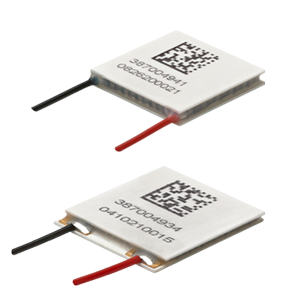
Tark Thermal Solutions’ HiTemp ETX Series is a high-temperature, high-performance TEC that uses enhanced thermoelectric module construction, preventing performance-degrading diffusion. It features a higher thermal insulating barrier when compared to standard materials, creating a maximum temperature differential (ΔT) of 83°C. It can be considered when the TEC must cool a larger optical bench or a genuinely high-power WSS subsystem, such as:
- WSS optical assembly thermally coupled to nearby control ASICs/drivers
- Large LCoS package plus heat-spreading submount whose true heat load exceeds OTX capability
- Sealed module with high ambient temperature and substantial setpoint-to-sink differential
- Configuration where physical footprint is not constrained to chip scale
Conclusion
With TECs on the optical core, a WSS can:
- Maintain stable wavelength‑to‑port mapping and per‑channel attenuation across wide ambient ranges (e.g., outdoor cabinets vs. central offices)
- Reduce the frequency and magnitude of calibration updates and firmware compensation, because the underlying optics are more thermally predictable
- Avoid thermal‑induced failure modes such as long‑term drift, mis‑routing, and accelerated aging of LC or MEMS structures, improving reliability and uptime.
- Selecting the ideal thermoelectric cooler depends on the chip’s thermal load, target setpoint, and mechanical envelope. Tark Thermal Solutions’ portfolio offers standard and custom single‑stage or multistage TECs, sized to the LCoS package heat load and footprint.
- Wavelength Selective Switches are central to the flexibility and scalability of modern optical networks. Their ability to route, shape, and manage individual wavelengths depends on careful thermal management.

Applications
Product Section
Related Products

